
What I Brought Back
Part Three of Three
I sat in the Court of Offerings at Edfu, my head against a column, looking up at the sky. I was alone. I stayed for a long time.
Edfu is one of the best-preserved temples in Egypt. The Ptolemaic temple that stands today was built and decorated over roughly 180 years — from 237 BCE to 57 BCE. But the ground itself is older. Earlier temples to Horus, the falcon god, stood on this site long before. Every year, Hathor traveled south from her temple at Dendera to be reunited with him here — the Feast of the Beautiful Reunion, the sacred marriage. The walls hold the story of how the world was made out of chaos.
The same walls hold the violence of erasure. In the fourth century after Christ, when the temple fell out of use following the Roman anti-pagan edicts, iconoclasts hammered out the faces of the gods. You can see the marks above your head if you stay long enough. The hypostyle hall ceiling is still scorched from where they tried to burn it down.
For twelve hundred years, the temple was buried under sand and silt. Villagers built mud-brick houses on the roof, not knowing what was beneath them. The same sand that erased it also preserved it. The same forgetting kept it intact for us to find.
I felt sad first. Then contemplative. Then, after a while, at peace.
I did not understand it then. I think I understand it now. Some places hold beautiful things and tragic things at the same time, and the peace is not despite the contradiction. The peace is the contradiction. Nothing whole survives without also surviving its opposite.
I was not alone in this.
There were guides on the trip. Many of them — at each temple, at each stop. They were all attentive. But several of them, over those weeks, did something I am still trying to put words around.
They would take me to the sacred spots that no one else was visiting. Show me something I didn’t understand, then encourage me to stay with it. Then take me somewhere else. They were not doing this with anyone else I was traveling with. I don’t know what energy I was holding that they were reading. But they were reading something.
I was being recognized.
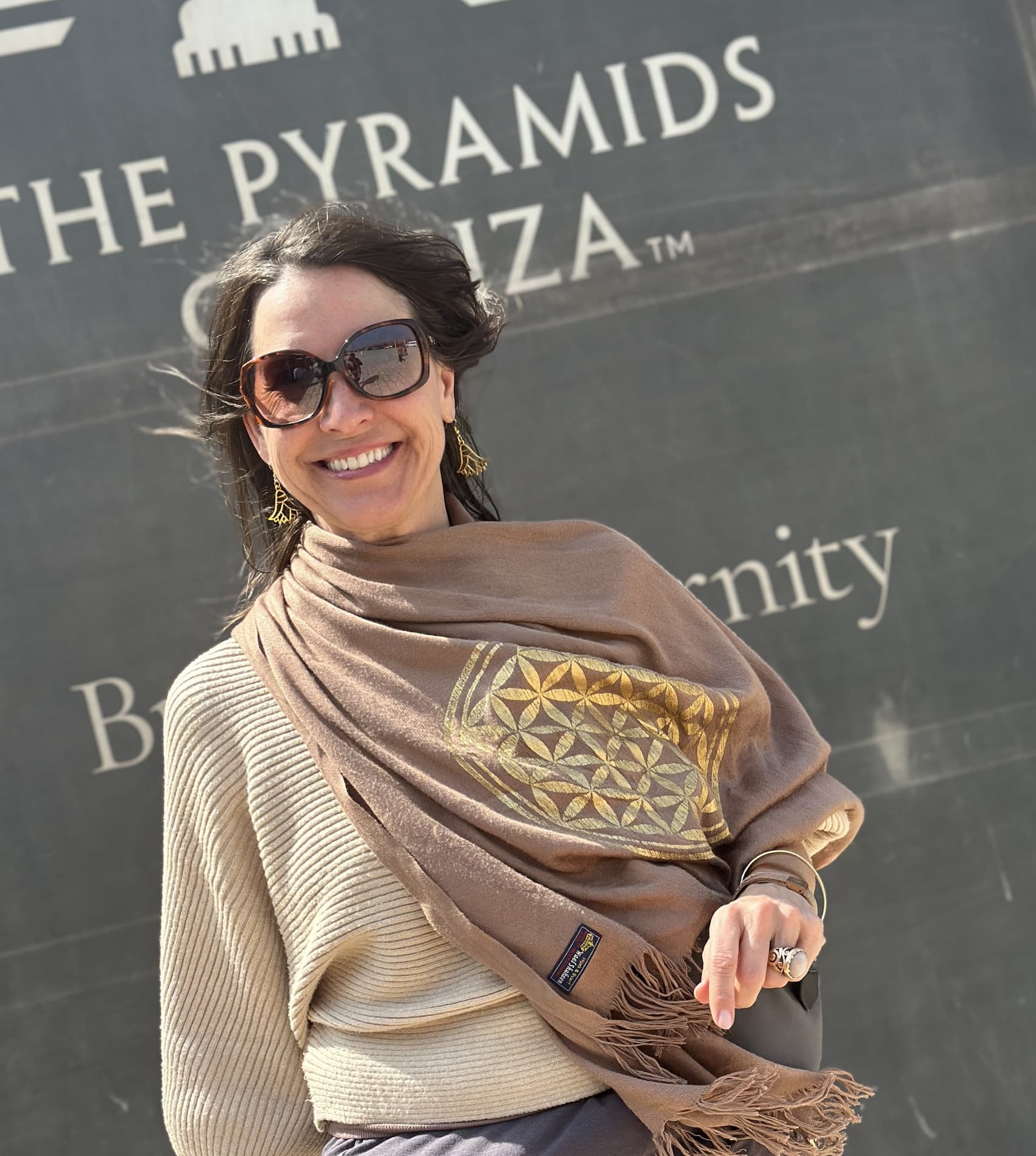
At the Pyramids of Giza. The Flower of Life carried with me.
And then I came home.
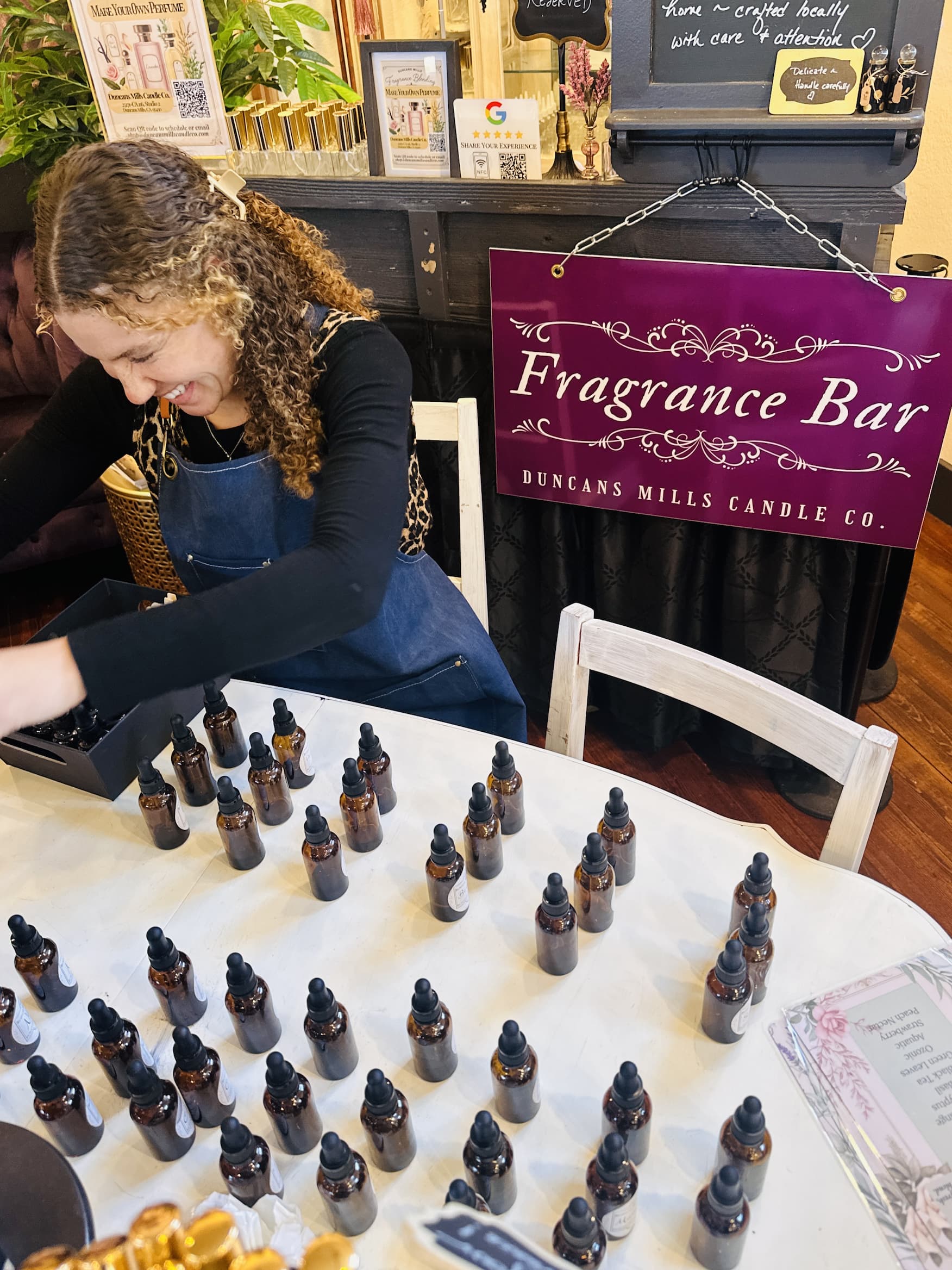
The working table. Where the recognition becomes the practice.
Inside the shop, there is a table with many bottles on it. Dozens of fragrance oils, amber dropper bottles arranged across the wood. The Scent Blending Experience begins there. Someone sits down across from me, with no idea what they are doing yet. We talk for a few minutes — where they grew up, the smells that bring them home, the moments they want to mark. Then we begin.
I lead them through the oils. Some they pick up on instinct. Some I hand to them. They smell, they react, they say something true without meaning to. We layer. We adjust. We build toward something they did not know was inside them.
By the end of the hour, they have made a fragrance that could only be theirs. And there is a moment — I see it every time — when they recognize what they just did. The face changes. They sit back. They have crossed from I don’t know what I’m doing to I made this.
I was reading them the whole time. Intuitive, but trusting in the same vein.
This is what I brought back. Not a new practice. The language of recognition for the practice I already had.
The guides at Edfu gave me something on that trip. The recognition of being seen by someone who knew what to look for. I did not earn it. I was simply held by it. And now, at the working table, I find I can give it back — to whoever sits across from me. The lineage is not the recipes. The lineage is the act of recognition itself, passed forward, made daily.
There is a book coming. Wax & Reverence — written before Egypt, and being shaped by it. About what the senses know that we have forgotten. About scent as a way of recognizing one another, and ourselves.
And there is a way to bring this work into other rooms now — the Mobile Fragrance Bar, the same table, the same recognition, brought to a place rather than waiting in one. Weddings. Retreats. Studios. Where the right people are gathered.
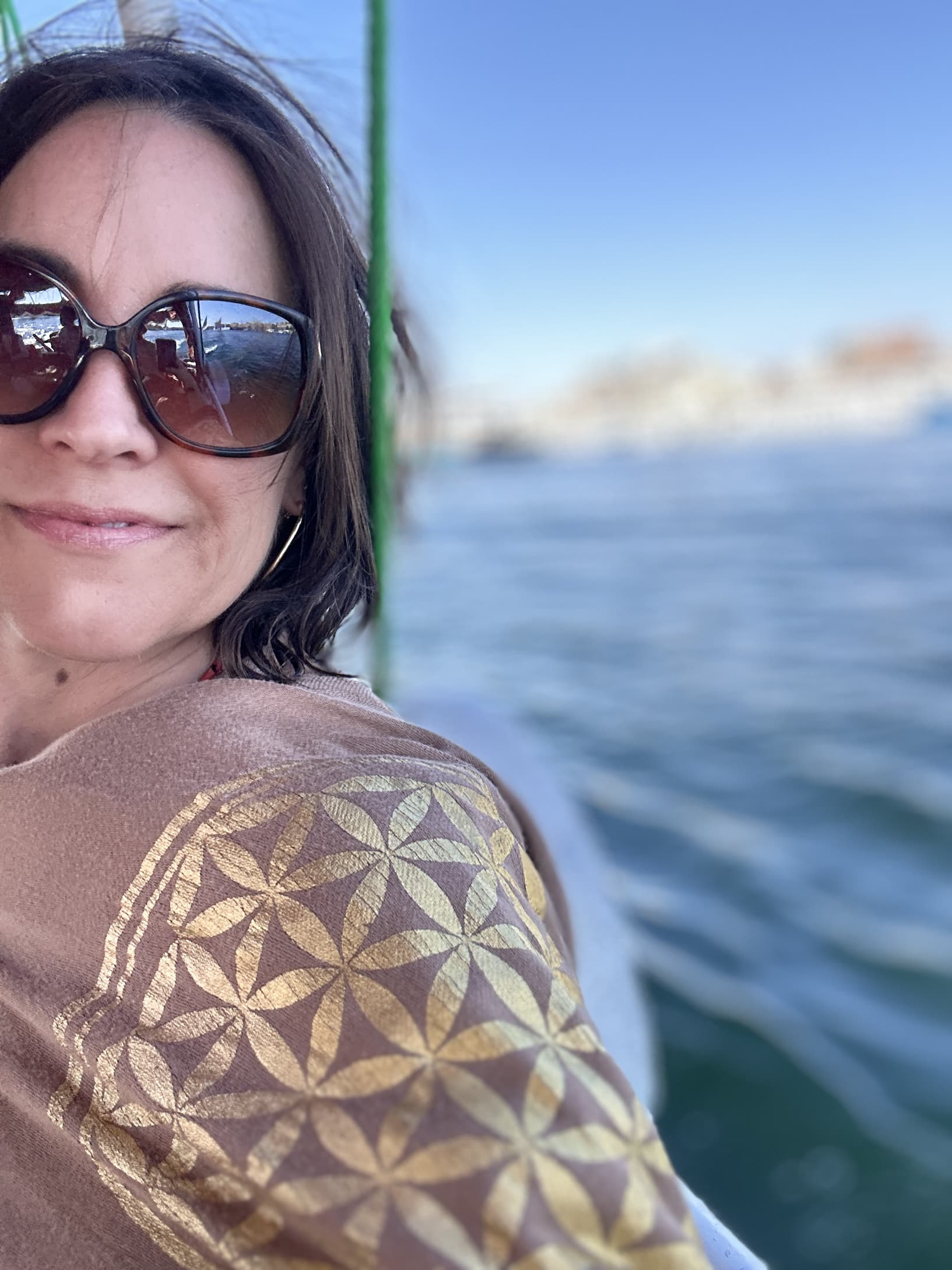
On the Nile. The river where the first ateliers stood.
Five thousand years ago, the first ateliers stood on the Nile. The recipes are still on the walls. The hands that blended the oils are gone. The thread has not broken.
What we carry forward is not the formula. It is the way of looking. The way of listening. The way of recognizing each other across a small table covered in amber bottles.
Smaller than a temple. The same care for materials. The same attention to the hours. Part of the same lineage.
With reverence,
Stephanie
P.S.
This is the third and final letter on where fragrance began. The next letter — the first Letter from the Atelier — arrives Thursday, June 25. We move from Egypt to the Russian River. From lineage to place.
If you missed the first letter or the second, they are both on the journal.